
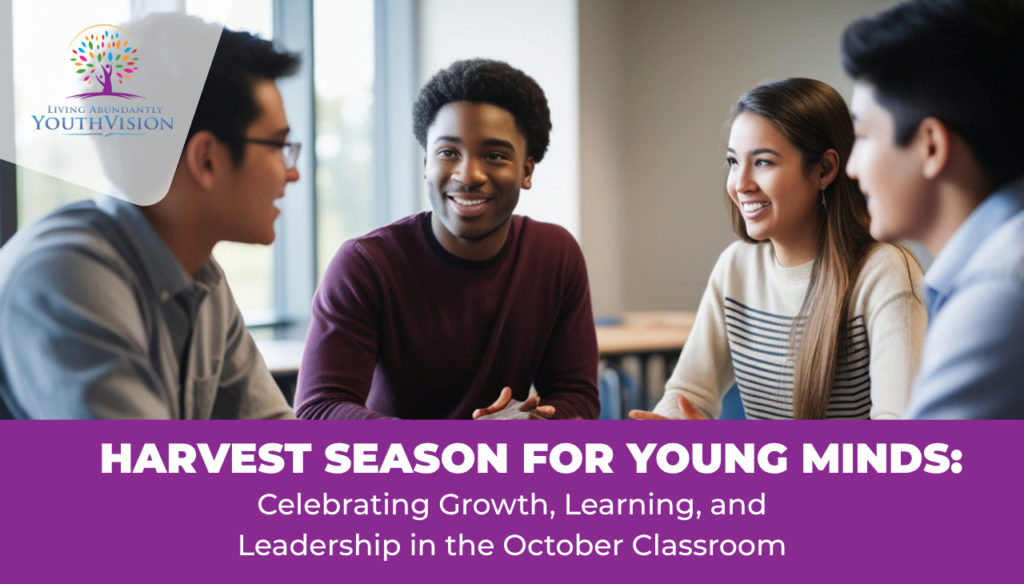
October carries the language of harvest. It is a season associated with gathering what has been planted, recognizing progress, and appreciating what patient cultivation can produce. In the classroom, at home, and throughout the community, young people are experiencing a harvest of their own.
That harvest is not measured only by grades. Youth growth and leadership can be seen in a student who has learned to speak with more confidence, manage responsibilities more consistently, recover after disappointment, collaborate with others, or take initiative without being asked. These developments deserve to be recognized because education is about more than completing assignments. It is also about becoming.
At Living Abundantly Youth Vision (LAYV), we believe young people thrive when education, mentorship, character development, and leadership opportunities work together. Our programs are designed to help youth and young adults recognize their potential and build practical skills for purposeful living. Explore the LAYV youth development programs to learn more.
October Is a Checkpoint, Not Just Another Month
By October, the excitement of a new academic year has often settled into routine. Expectations are clearer. Assignments are becoming more demanding. Students are discovering which habits are helping them and which ones need improvement.
This makes October an important checkpoint. Instead of waiting until the end of a semester or year to decide whether a young person is succeeding, parents, educators, mentors, and youth leaders can use this season to notice smaller indicators of development. Is the student asking better questions? Are they becoming more responsible? Are they learning how to manage frustration? Are they willing to correct mistakes?
Growth does not always announce itself through a major achievement. Sometimes the strongest evidence of progress appears in ordinary choices made consistently.
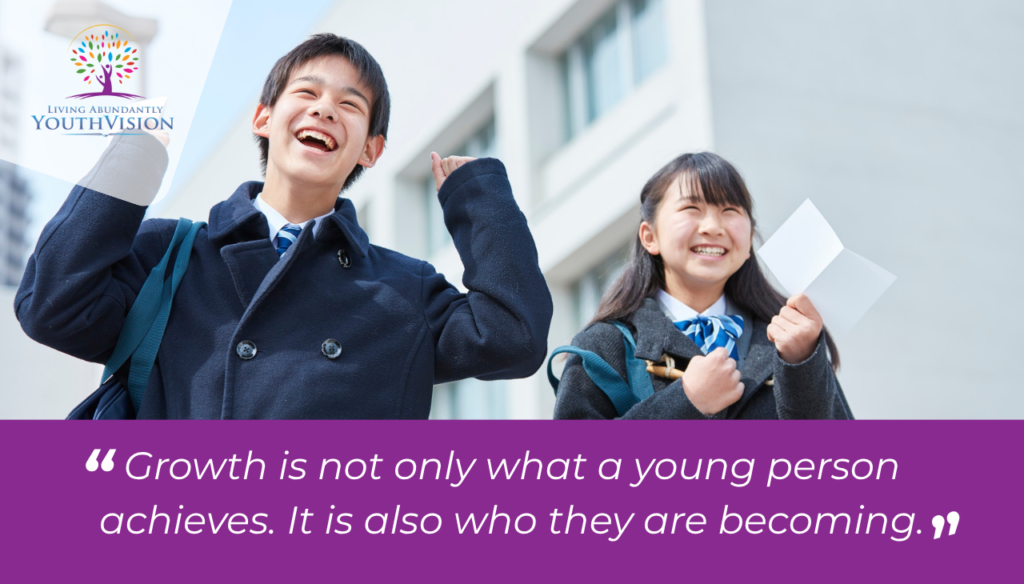
“Growth is not only what a young person achieves. It is also who they are becoming.” |
When adults learn to identify this kind of progress, young people receive a healthier message: their development matters, not just their performance.
Celebrating the Full Harvest of Learning
Academic achievement is important, but learning is broader than academic performance. A student may be improving in mathematics while also developing perseverance. Another may be strengthening reading skills while learning to ask for help. A teenager participating in a group project may be learning cooperation, communication, time management, and accountability at the same time.
These skills matter because life rarely separates technical ability from character. Young people eventually need both. A capable student who cannot manage responsibility may struggle to turn knowledge into opportunity. A talented young person who cannot communicate effectively may find it difficult to lead. A confident young person without integrity may influence others in the wrong direction.
Education therefore becomes more powerful when we ask not only, “What did you learn?” but also, “What did this experience teach you about yourself?” Research on positive youth development emphasizes involving young people as active participants in their development and creating opportunities for leadership, community contribution, and meaningful partnerships with adults. Youth.gov explains these positive youth development principles.
Youth Growth and Leadership Begin with Small Responsibilities
Leadership is sometimes presented to young people as something that begins later—with a title, career, organization, or public platform. But leadership begins much earlier. It begins when a student prepares for class without repeated reminders. It appears when a young person includes someone who feels left out. It develops when they admit an error instead of blaming someone else. It strengthens when they complete an assignment, keep a commitment, help solve a problem, or encourage a peer.
LAYV’s approach to leadership emphasizes practical skills such as communication, decision-making, strategic thinking, teamwork, and confidence. Young people can develop these qualities long before adulthood. Explore LAYV’s Leadership Training program for more on developing purposeful leadership.
Adults can support this development by giving young people meaningful responsibilities rather than doing everything for them. Responsibility communicates trust. Appropriate challenge tells a young person, “I believe you can learn how to handle this.” Mistakes will happen. They are part of the learning process. The goal is not to remove every difficulty from a young person’s path but to help them develop the judgment and resilience to navigate difficulty well.
Mentorship Helps Young People Recognize Their Progress
Young people often need another person to help them see growth they cannot yet recognize in themselves. A mentor can notice the difference between who a young person was six months ago and who they are becoming now. A teacher can identify an emerging strength. A parent can remind a teenager that one difficult week does not erase months of progress. A coach or youth leader can challenge potential that has not yet been fully developed.
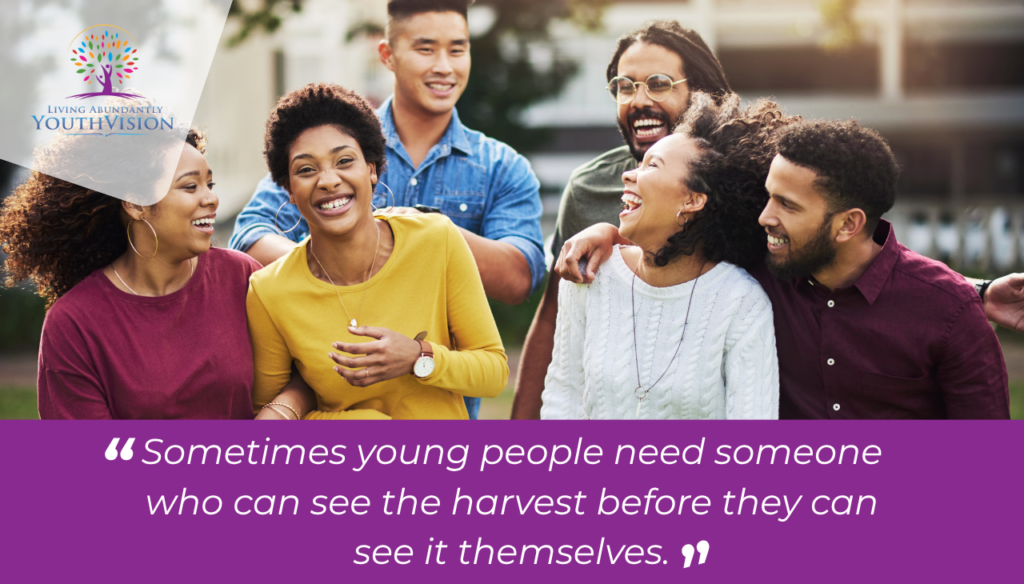
“Sometimes young people need someone who can see the harvest before they can see it themselves.” |
Supportive mentoring relationships can contribute to stronger self-confidence, school engagement, interpersonal skills, and healthier relationships with adults and peers. Effective mentoring is especially valuable when relationships are consistent, supportive, and responsive to the young person’s needs. Youth.gov outlines the benefits of mentoring for young people.
This is why encouragement should be specific. Instead of saying only, “Good job,” tell a young person what you noticed: “You kept working even when the assignment became difficult.” “You handled that disagreement more maturely than before.” “You were prepared today.” “You helped your team succeed.” Specific affirmation teaches young people how to identify the habits and character qualities contributing to their progress.
Do Not Compare One Young Person’s Harvest with Another
October’s natural landscape offers an important lesson: everything does not mature at exactly the same moment. The same principle applies to young people. One student may develop academic confidence quickly while another needs more time. One teenager may naturally speak in front of groups while another leads quietly through dependability and service. One young person may already have a clear career vision while another is still discovering interests and strengths.
Comparison can make healthy development feel inadequate. Adults should certainly maintain expectations, provide accountability, and challenge young people to improve. But there is a difference between challenging someone according to their potential and measuring their worth against someone else’s timeline.
When young people understand that growth is personal, they can focus more productively on progress. Ask, “Are you stronger than you were before?” rather than, “Why are you not where someone else is?” That distinction protects confidence while still encouraging responsibility.
Six Ways to Help Young People Recognize and Build on Their Growth
October is an excellent time for a simple progress review. Parents, teachers, mentors, and young people themselves can use these six steps:
- Name three areas of progress. Identify academic, personal, relational, or leadership improvements that have occurred since the beginning of the school year.
- Identify one habit that contributed to the progress. Connect outcomes with behavior. Was improvement supported by studying consistently, asking questions, practicing, planning ahead, or seeking help?
- Choose one area that needs attention. Growth becomes stronger when reflection includes both celebration and correction.
- Set one achievable October-to-November goal. Make the goal specific enough to track—for example, submitting every assignment on time or reading for twenty minutes four days per week.
- Ask a trusted adult for support. Mentors, parents, teachers, and coaches can provide accountability and perspective.
- Celebrate progress without becoming complacent. Recognition should create momentum. The message is not “I have arrived,” but “I can see that growth is possible, so I will keep going.”
Reflection: What Is Growing?
Reflection Box
- What are you able to do now that was more difficult at the beginning of the year?
- Which habit has helped you grow the most?
- Where do you still need support?
- When have you shown leadership recently, even without a title?
- What would meaningful progress look like by the end of this year?
The Harvest Is Evidence That Growth Is Happening
October gives us an opportunity to acknowledge what has been developing beneath the surface. A stronger grade matters. So does increased confidence. Better attendance matters. So does learning to communicate respectfully. Completing a project matters. So does developing the discipline required to complete it.
At LAYV, our commitment is to help young people understand that their lives are not waiting to become meaningful someday. Through mentorship, education, emotional development, financial literacy, and leadership training, they can begin strengthening the skills and character they need now. Learn more about Living Abundantly Youth Vision and its mission. The harvest is worth celebrating—but it is also evidence that there is more growing still to come.
“Celebrate the progress, learn from the process, and keep cultivating the leader who is emerging.” |
Ready for the next step?
Help a young person turn potential into purposeful growth. Explore LAYV’s coaching, development, and leadership programs and connect with the organization about support that fits their season. Explore LAYV programs.
Keep reading: Leadership Begins Now | Growing on Purpose | Explore LAYV Leadership Training