
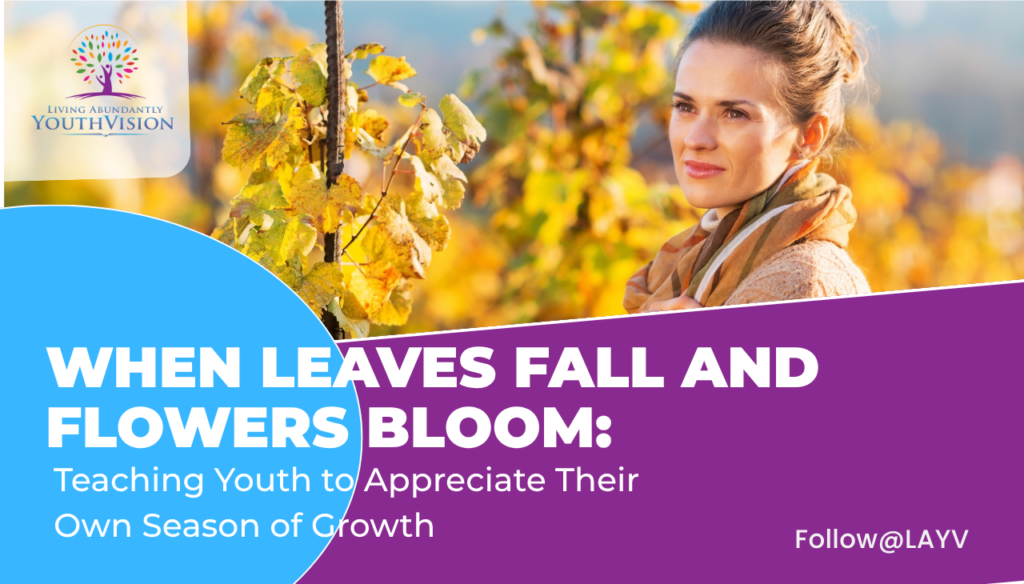
October reminds us that nature can tell more than one story at once. In one place, leaves are changing color and falling from trees. Somewhere else, flowers may be blooming. One landscape is preparing to release; another is opening into new life. Neither is behind. Neither is ahead. Each is responding to its own season.
Young people need this lesson. A healthy youth season of growth cannot be measured entirely by another person’s accomplishments, personality, timeline, grades, talents, social visibility, or opportunities. Part of helping youth mature is teaching them how to recognize where they are, appreciate the progress they are making, and remain committed to becoming without allowing comparison to define their worth.
At Living Abundantly Youth Vision, this work is central to helping youth and young adults strengthen identity, confidence, character, emotional awareness, and leadership. Explore LAYV’s youth development programs.
Comparison Can Distort a Young Person’s View of Growth
Comparison is not new, but young people today can encounter it continuously. Academic rankings, athletics, appearance, friendships, popularity, college plans, creative talent, leadership positions, financial opportunities, and online visibility can all become comparison points.
A teenager may be making genuine progress and still feel unsuccessful because someone else appears to be moving faster. That is the danger.
“Someone else blooming does not mean you have missed your season.” |
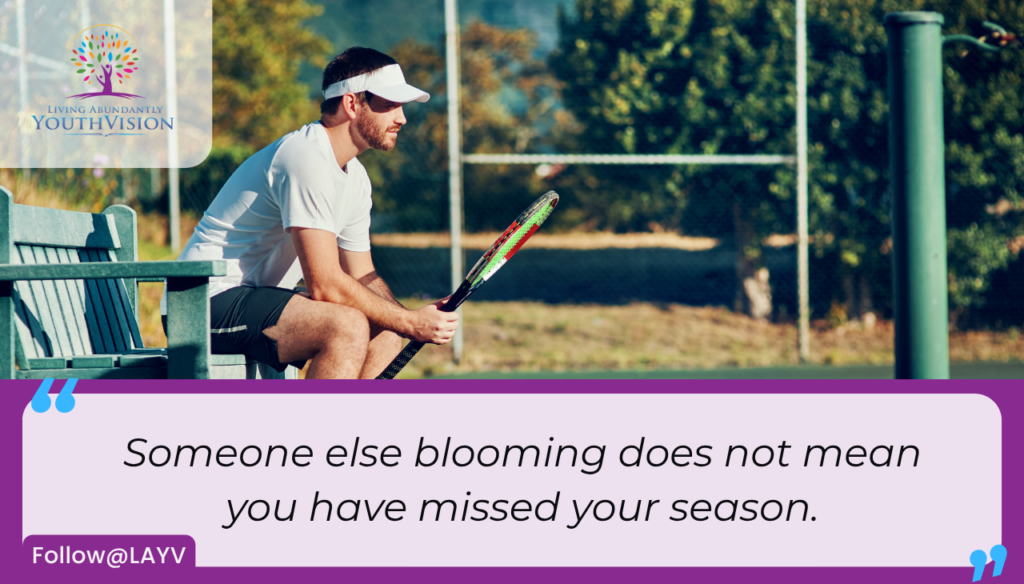
Comparison can cause young people to overlook the evidence of their own development. Instead of asking, “What am I learning?” they begin asking, “Why am I not like them?” Instead of developing their strengths, they spend energy trying to imitate someone else’s path.
Adults can interrupt that cycle by consistently separating inspiration from comparison. Inspiration says, “Their progress shows me what may be possible.” The comparison says, “Their progress proves something is wrong with me.” One expands possibilities. The other can shrink confidence.
A Youth Season of Growth Includes Both Blooming and Letting Go
Personal development is not only about adding new abilities. Sometimes growth requires releasing what no longer supports the person a young individual is becoming. October gives us a strong image for this.
Trees release leaves as seasons change. For young people, letting go may involve an unhealthy friendship, poor time-management habits, fear of speaking up, procrastination, negative self-talk, dependence on approval, or an attitude that keeps them from receiving corrections.
Letting go is not always comfortable. A young person may know that a habit is harmful and still feel attached to it. They may understand that certain friendships are distracting but fear being alone. They may want to become more disciplined but resist the structure that discipline requires. This is where mentorship and patient adult guidance become important. Youth.gov notes that effective mentoring relationships are consistent, supportive, and responsive to a young person’s needs. Development requires both challenge and safety: enough challenge to keep growing and enough support to keep trying.
Help Youth Measure Progress Against Purpose
If comparison is an unreliable measurement, what should young people measure themselves against? Purpose, values, goals, and previous progress provide healthier reference points. A student trying to improve academically can ask whether study habits are becoming stronger. A young leader can examine whether communication is becoming clearer. A teenager developing confidence can notice whether they are speaking up more often than before.
The question becomes: Am I becoming more capable of living according to the person I want to be? That is different from asking whether someone is outperforming everyone around them.
LAYV’s leadership-development work reinforces this principle by focusing on practical abilities such as communication, decision-making, strategic thinking, conflict resolution, and confidence, not merely titles. Explore LAYV Leadership Training. Purpose gives growth direction. Without direction, young people may chase whatever receives the most applause. With purpose, they can begin choosing development that has lasting value.
Different Young People Need Different Forms of Support
Treating young people fairly does not always mean treating them identically. One student may need greater structure. Another may need room to exercise independence. One may need encouragement to speak. Another may need coaching on how to listen. One may need accountability around schoolwork while another needs help managing perfectionism and unrealistic expectations.
“Support the young person in front of you, not the version you expected them to become.” |
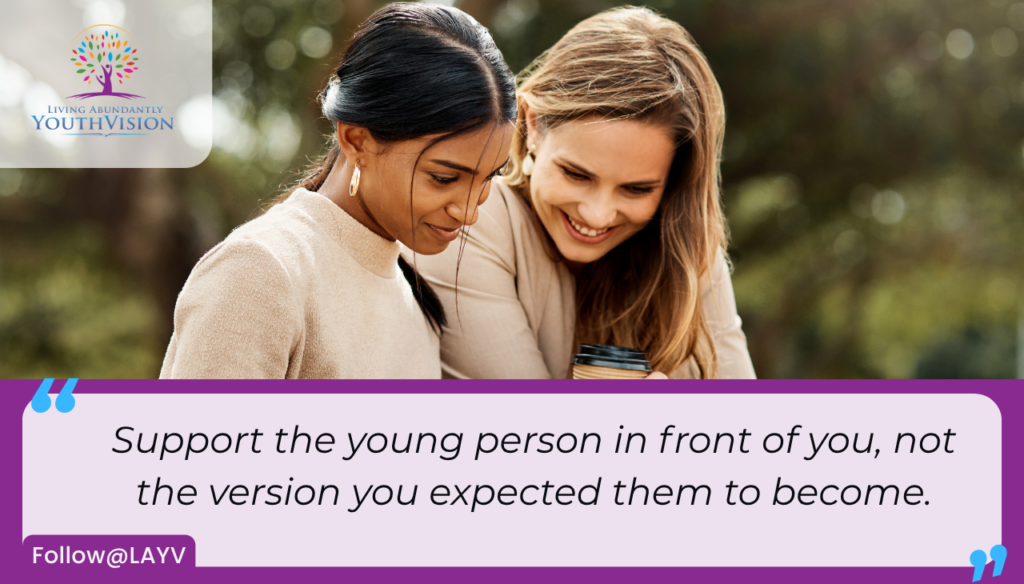
Positive youth development recognizes young people as active participants rather than passive recipients. Adults and youth work together, and young people are given meaningful opportunities to contribute, participate, serve, and lead. Youth.gov outlines these positive youth development principles. This means adults must listen.
Ask young people what support feels useful. Ask what they are finding difficult. Ask what they are proud of. Ask where they want more responsibility. We cannot mentor effectively if we only speak. Sometimes young people need instruction. Sometimes they need correction. Sometimes they need an opportunity. Sometimes they need someone to listen long enough for them to hear their own thoughts clearly. Wise support learns the difference.
Confidence Grows When Progress Becomes Visible
Young people can easily overlook gradual development. Consider a student who once avoided presentations but can now speak for three minutes in front of a class. That may not feel dramatic to everyone else, but it could represent months of courage. Or a teenager who once spent money impulsively but has started saving a portion consistently. That represents developing discipline and financial awareness.
LAYV’s Financial Literacy program is one example of how practical learning can help young people build confidence through real-life skills. Progress becomes motivating when it is visible. This is why reflection is important. Journals, progress trackers, goal reviews, conversations with mentors, portfolios, checklists, and milestone celebrations can all help young people see evidence that effort is producing change.
Educators can also strengthen motivation by pairing high expectations with guidance about how students can improve, focusing attention on growth and effective strategies instead of treating ability as fixed. Edutopia discusses assessment practices that motivate students to improve. Confidence does not have to be manufactured through empty praise. It can be built from evidence: “I worked.” “I learned.” “I improved.” “I handled something differently.” “I kept going.”
Six Practices for Helping Youth Appreciate Their Own Growth Season
Parents, educators, mentors, and youth leaders can put this principle into practice:
- Replace comparison questions with progress questions. Instead of “Why can’t you perform like them?” ask, “What needs to improve from where you are now?”
- Help young people identify their strengths. Strengths may be academic, relational, creative, organizational, spiritual, technical, athletic, or leadership-based.
- Name what needs to be released. Have an honest conversation about one habit, mindset, distraction, or relationship pattern that may be limiting growth.
- Set development goals that fit the individual. Goals should stretch a young person without being disconnected from their present capacity and circumstances.
- Connect youth with consistent mentors. Supportive mentoring can strengthen self-esteem, relationships, educational engagement, and interpersonal development.
- Celebrate movement, then identify the next step. Celebration and accountability belong together. Recognition should strengthen momentum rather than end it.
Reflection: What Season Are You In?
Reflection Box ● What area of my life is growing strongly right now? ● What am I learning that I could not have handled as well a year ago? ● What do I need to release to continue growing? ● Where am I comparing myself instead of appreciating my progress? ● What is the next healthy step for this season? |
Your Season Still Has Purpose
Not every season looks impressive from the outside. Some seasons are highly visible. Others are quiet. Some bring new opportunities. Others require preparation, healing, learning, discipline, or letting go. All can have value.
Young people should not be taught to excuse a lack of effort by saying, “This is just my season.” Growth still requires responsibility. But they should understand that development is not a race against every person around them. The healthier goal is intentional progress. At LAYV, we want young people to develop enough confidence to appreciate who they are while remaining courageous enough to keep growing. Learn more about LAYV and its work with youth and young adults.
Leaves can fall while flowers bloom somewhere else. Neither image is a failure. Both remind us that growth has rhythm—and every young person needs the wisdom to honor their season while preparing faithfully for what comes next.
“You do not have to copy someone else’s season to become everything your own was designed to produce.” |
Ready for the next step?
Give growth the guidance it deserves. Explore LAYV’s mentoring, leadership, financial literacy, and personal-development opportunities for youth and young adults. Explore LAYV programs.
Keep reading: Discipline and Responsibility | Summer of Purpose | Explore LAYV Programs